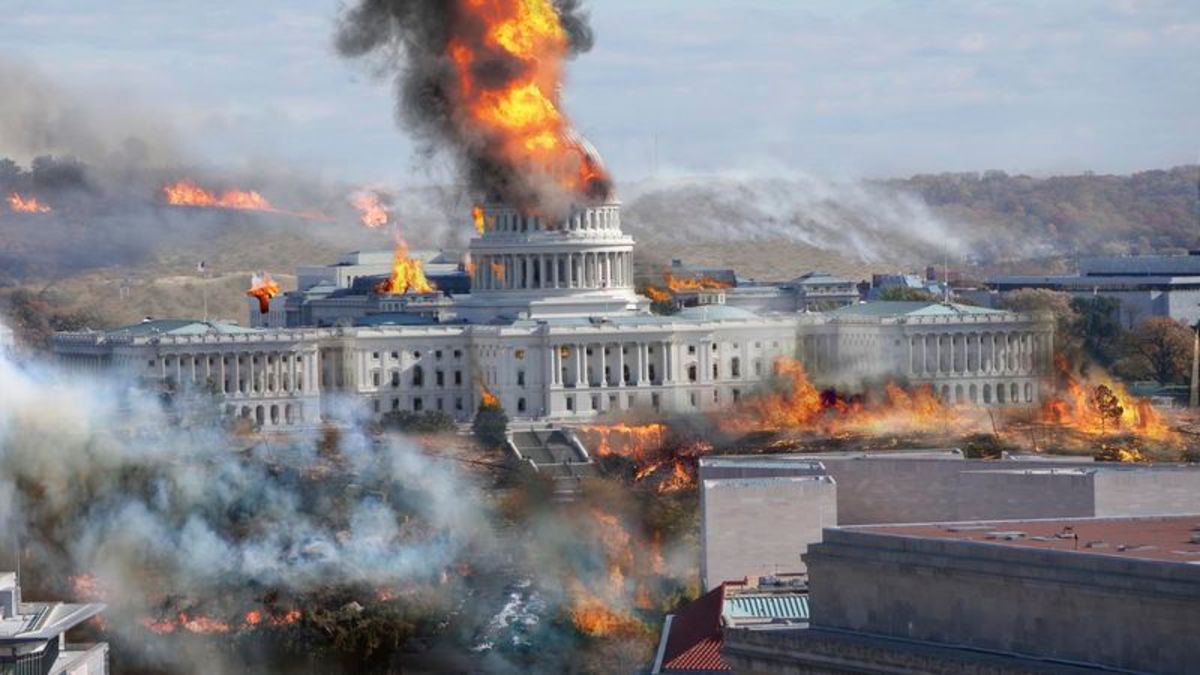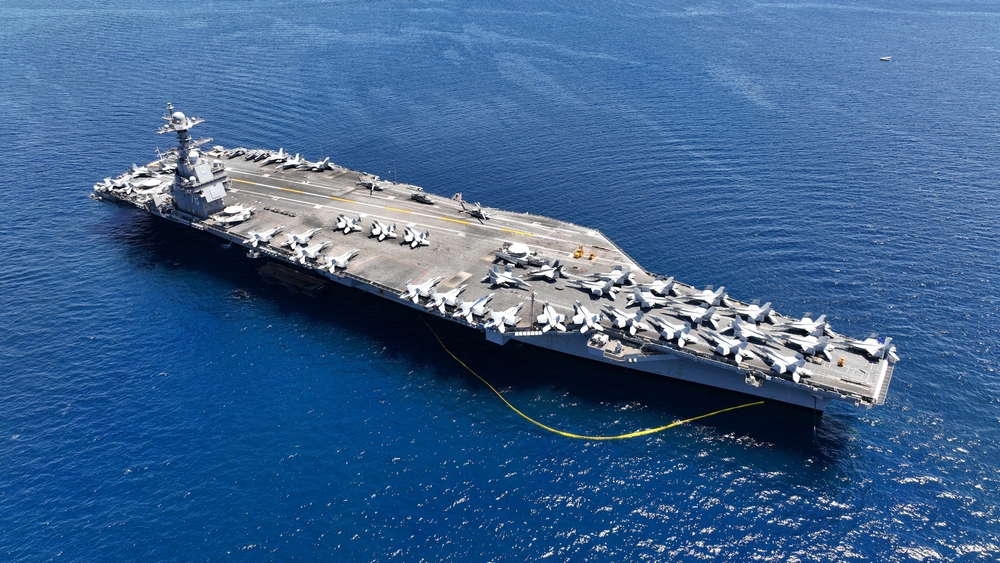

An update on Asia. China and Japan have been bitter enemies for centuries. The U.S. has more than 79,000 troops in Japan and Korea, and are siding with the Japanese. The Japanese just elected a very nationalist prime minister. It would seem the conflict is escalating. Considering China has more than 2 million men in uniform, nukes and has aircraft carriers, this could get very messy very quickly. A conflict to end all conflicts and make the Middle East sandboxes look like child’s play.
United States military deployments: Asia-Pacific
Australia – 346
Japan – 50,937
Philippines – 143[1]
Singapore – 154[1]
South Korea – 28,500
Thailand – 117
The First Sino Japanese War August 1, 1894 – April 17, 1895

China, Japan, And The US – Tying It All Together
Originally posted by Stratfor,
Summary
As Japan and China increase naval and air activity around the disputed Senkaku/Diaoyu islands in the East China Sea, the United States is steadily increasing its active involvement to reassure Tokyo and send a warning to Beijing. But Beijing may seek an opportunity to challenge U.S. primacy in what China considers its territorial waters.
Analysis
The United States is monitoring Chinese air activity from E-3 Sentry aircraft based at Kadena air base on Okinawa in response to increasing incidents of Chinese combat and surveillance aircraft shadowing U.S. P-3C and C-130 flights near the Ryukyu islands, according to Japanese and Korean media reports. Chinese pilots are more actively shadowing U.S. military aircraft flying through the airspace between China and Japan. Chinese aircraft have also reportedly violated Japanese airspace near the disputed Senkaku/Diaoyu islands several times since mid-December, prompting Japan to send its aircraft, including F-15Js, to monitor Chinese actions. ?
The use of E-3s would bolster U.S. coordination and provide advance warning of possible encounters with Chinese aircraft, but its purpose may also be to offset some of Japan’s weaknesses in the area. Japan’s Defense Ministry wants to supplement its early warning capability — its radar station on Miyako Island, near Okinawa, cannot detect Chinese aircraft flying over the sea at low altitudes. As the Japanese government continues to review its policies and capabilities for dealing with China’s assertive stance on the disputed islands, Tokyo has identified several gaps in its ability to address Chinese actions. Japan will depend on the United States to fill these gaps as its military purchases new systems, shifts its existing forces and adjusts its rules of engagement.
Escalation
Until 2012, the dispute over the islands was only an occasional source of tension between China and Japan. The two sides had operated under a tacit agreement: China would not push its claims if Japan did not develop the islands. In April 2012, then-Tokyo Governor Shintaro Ishihara, in a speech at the Heritage Foundation, announced the city’s plans to purchase the Senkaku Islands from their Japanese private owner. This action forced the Japanese central government to purchase the islands outright rather than continue to rent them from the private owners or allow Ishihara to buy the islands and possibly begin to build facilities on them.?
What took place was effectively a change in the deeds to the islands, which in reality were already under Japanese control. Beijing, however, exploited the move to set in motion a nationalist campaign against Japanese businesses and products and to justify the new pace of Chinese maritime and air activity around the islands. China began sending more ships from its civilian maritime enforcement agencies to survey the waters around the islands and added aerial surveillance flights as part of a strategy to either force Japanese discussions over the islands or to demonstrate China’s presence and authority. In the first case, Japan does not acknowledge China’s claim to the islands, and thus it does not recognize a dispute, instead characterizing Beijing’s moves as Chinese aggression. In the second instance, China sees its increased presence as a way to either cow the other claimant or to help China build a stronger case should the dispute ever go to international arbitration.
Japan has already recognized several shortcomings in its own defense capabilities to counter Chinese actions. Tokyo is reviving discussions about moving some of its F-15s from Naha on Okinawa to Shimoji-shima, which would place the aircraft just 190 kilometers (118 miles) from the Senkakus, rather than 420 kilometers away, thus halving the current 15-20 minute flight time required to scramble Japanese warplanes to the islands. Tokyo is also seeking to develop or purchase additional unmanned aircraft, including the U.S. Global Hawk, to maintain more active monitoring of the area around the disputed islands, as well as of the Chinese coast 330 kilometers away. The Japanese Coast Guard is also planning a 12-vessel special patrol unit to monitor the Senkaku/Diaoyu islands. But most Japanese plans are slated for implementation no sooner than 2015. This leaves Tokyo unable to effectively counter Chinese activity for two more years.
The United States’ Pacific Presence
This is where the United States comes in. Tokyo and Washington are discussing a joint approach to the disputed area and to Chinese actions. Washington has said it does not recognize any sovereignty over the islands, but it does recognize Japanese administrative control, meaning that by default, Washington supports Japan. But the United States does not want a violent clash between Japan and China. By increasing its direct involvement, Washington can reassure Tokyo of its support, softening the pressure for Japan to take more aggressive action, and it can serve notice to China that more aggressive action would involve not only Japan but also the United States. ?
But this approach assumes China is willing to step back. In China’s view, the United States is trying to contain Beijing and encroach on its sphere of influence. Beijing sees the evidence of this in Washington’s pivot to Asia, in the expansion of its political and defense relations with Southeast Asian states and in its strengthened military posture throughout the region, particularly in Australia and the Philippines. China’s leaders see in some sense a Western attempt to prevent China, as a non-Western state, from taking its rightful place as a major regional power and international player. Chinese academics and officials raise the specter of a U.S. containment strategy similar to that used in the Cold War against the Soviets. Some also see a deeper U.S. and Western resistance to non-western power, an attitude they see going back to Western moves to block Japan’s emergence as a modern imperial nation in the early 20th Century. ?
The involvement of the United States, then, may not suffice to alter China’s actions around the disputed islands. Indeed, it may encourage China to more boldly test U.S. resolve and to assert its claim not only to the islands, but also to China’s expanded sphere of influence. In 2001, after a collision between a Chinese Jian-8 and a U.S. EP-3E, China held the plane on Hainan Island and demanded a U.S. apology. But more than just seeking an apology or trying to pry secrets from the plane’s airframe, China used the opportunity to try to show other Asian states that the United States and its military could be countered in Asia.
Beijing’s ability to resist U.S. demands and Washington’s unwillingness to intervene militarily were, for China, a victory. The 9/11 attacks on the United States shifted U.S. attention and the stresses of U.S.-China relations were quickly deprioritized. But those tensions are rising once again, and at a time when more military flights and ships are moving near the disputed area, Beijing may be on the lookout for another opportunity to reshape regional perceptions of Washington’s military commitment to Asia. And with the United States engaged for more than a decade in a war in Afghanistan, Beijing is calculating that Washington will continue to seek to avoid new conflict in Asia, giving China a short window of opportunity to make its point.


crazyivan-on-vodka says:
AWD,
“A conflict to end all conflicts and make the Middle East sandboxes look like child’s play.”-sic
If you were to assure me, that all conflict would end, I would burp in your face and pee on your shoes.
Like or Dislike:
0
1
21st January 2013 at 11:47 pm
sangell says:
I don’t see how China can profit from escalating this matter at this time. They have already basically destroyed their trade relationship with Japan so they’ve lost any leverage they had there. Do they intend to do the same with the US?
If they engage in any hostilities around the islands they not only tip their hand as to ‘how its going to be’ but drive the rest of Asia into the US/Japan security orbit. Vietnam and the Philippines have their own territorial disputes with China and having the US Navy re-establishing bases in Subic Bay or in Vietnam hardly enhances Chinese security or geopolitical goals.
The Chinese are basically in the position of Argentina in regards to the Falkland Islands in 1982 except there is no way to sustain a large garrison or airfield on such small islands and a larger navy would isolate any troops you did land and force a humiliating surrender. If you start sinking any ships you close your own ports to maritime traffic and can do nothing to close those of Japan or the US. What’s left? Take out your frustrations by launching rockets at Taiwan? Japan? Well Hitler did launch his V weapons at Britain but they did nothing to affect the war though they did motivate the US 8th Air Force and the RAF to incinerate a few extra German cities to express Allied displeasure at the measure.
Like or Dislike:
3
2
21st January 2013 at 12:08 am
Hollow man says:
Kinda goes hand in hand with the end game post. They will not fire a shot well, maybe an economic shot. They do not really need bullets, they have a trillion or so dollars to dump on the market or perhaps just but a little land and business just befor the money dump. Then they can get the cheap labor from the Americans and live the good life for a while. All the while reading about the horror of the increased sucide rate in the US.
Like or Dislike:
1
0
21st January 2013 at 6:39 am
Makati1 says:
I doubt the Philippines are going to entertain a US base again. They know that the Chinese don’t have to leave China to destroy the Philippines. And the Chinese have large investments in the Philippines I doubt they want to lose. The Philippine’s have more Chinese tourists than American tourists. The US is still shooting itself in the foot here with stupid blunders and actions.
US 7th Fleet commander regrets damage to Tubbataha Reef
http://ph.news.yahoo.com/us-7th-fleet-commander-regrets-damage-tubbataha-reef-010621229.html
Consider that an Asian war is much farther from the US than the Middle East, across a very dangerous ocean. China is more than a match for the dying Empire. And will only get stronger as the Empire weakens.
Well-loved. Like or Dislike:
7
2
21st January 2013 at 6:56 am
Nonanonymous says:
Hollow man, cheap labor in the US? Not enough supply!
When they’ve got their own, who needs the US? The problem is they can’t meet the needs of their people who will revolt if given an opportunity. Then it comes down to what is important, which is to live your life peaceably among your neighbors.
The problem in the US is just the opposite, we can’t meet the needs of our government, which has gone rogue at every opportunity in the lust for power.
The US and Chinese governments are no different in this regard. Each will turn on it’s own at the drop of a hat.
Like or Dislike:
4
0
21st January 2013 at 6:59 am
Hollow man says:
True that on supply. But they couldhave us do the things they find degrading. While the world ses a different reserve currency.
Like or Dislike:
1
0
21st January 2013 at 8:32 am
sangell says:
Makati why would the Phillipines allow itself to become a Chinese satrapy and how friendly are your relations if a large neighbor is threatening to ‘destroy’ you. The United States and the Philippines have certain mutual interests, Philippine independence and sovereignty being paramount.
From the perspective of the Chinese, the Pacific Ocean is an American lake. China has no allies along its littoral while the US has longstanding and powerful allies everywhere. Canada, Australia, Japan, Taiwan, South Korea, Vietnam and yes, the Philippines.
Against this China has what… North Korea! Its military forces have absolutely no combat experience and precious few combat proven weapon systems. Chinese generals and admirals may talk tough but they are likely to get a very unpleasant surprise should they ever have to put their freshmen forces on the field against the battlefield tested forces of the United States and its allies.
Like or Dislike:
1
0
21st January 2013 at 9:02 am
Bostonbob says:
Makati, I would think the Philipino’s still hate the Japanese for the atrocities that they performed against them in WW II. From what I have read the Philipino people did not hate the US base as much as they liked the US $, before we devalued it.
Thank you,
Bob.
Like or Dislike:
1
0
21st January 2013 at 1:08 pm
AWD says:
The Chinese don’t need allies. They are the most populous nation in the world. They have more than $2 trillion in dollar assets, which they are trying to liquidate before Bernake and Obama make them worthless (see “end game” post).
We pay the Chinese more in interest on our debt that they own (per year) than they spend on their entire military. They don’t open their markets to American goods (neither do the Japanese). And if that weren’t bad enough, our trade deficit with China continue to grow every single month. We just keep sending them more and more of our money. They own us, but not our military. Despite what our propaganda MSM want people to believe, they own us. We, as well as the Japanese, are in a very weak position, economically speaking.
Like or Dislike:
2
0
21st January 2013 at 1:37 pm
TeresaE says:
I’m amazed that “smart” people cannot see the biggest card China holds – our technology.
What would happen if they decided tomorrow that NOTHING more would be shipped to America? I guess the majority of Americans seem to believe that they would cave because their population would be freaking out about jobs.
I see it slightly different. If China quits shipping tomorrow we will lose ALL electronics (including replacement parts and defense). We will also lose insulin, aspirin, rare earth minerals, oil (you do realize that Russia owns the major pipeline bringing oil from Canada to the US, don’t you?), chemicals necessary for everything from food to meds to gasoline additives. Oh yeah, food too. Gone overnight, *poof*.
Plus, if they are as wily as I believe them to be (and I worked with Chinese nationals, they enlightened me on much about their culture), they copied our lead and have installed “kill switches” in the chips they have sent us.
We have traded our very futures for cheap socks, “cleaner” air, and “high-tech jobs” today. I’m sure it will work out fine.
My hub has decided that this war “can’t” happen because he actually believes our defense industry/leaders have a clue.
They don’t. Every so often we get calls for quotes on “American-made” fasteners. They are calling us because they have called all the mega-corps and are unable to locate nuts/bolts that meet the Federal “American-made” purchasing requirements (for some jobs).
These callers don’t get it. Neither do their bosses. Neither do most of us.
There are literally things you use EVERY day that are no longer made here AT ALL.
Now, I’ll wait for someone to pull out the old, “we’ll just fire our empty factories back up and start producing again.”
bwaaaaahaaaaahaaaa.
China has the knowledge now, China has the equipment now, and China has spent the past decade exchanging OUR fiat for the rights to nearly every natural resource on the planet.
We are so in for such a rude awakening. Japan is going to war because after 20 years of check-kiting and delaying the inevitable (plus the Fukishima disaster, still ongoing, still killing economy more), they have no choice.
Which if we side with them should prove but one thing to us, neither do we.
And really, we don’t. Quick, name one major nation that didn’t/hasn’t declared war once the underlying economy & society was hollowed out to the point of failure.
Please.
Like or Dislike:
4
1
21st January 2013 at 1:59 pm
sangell says:
As General Turgidson said in Dr. Strangelove “I’m not saying we won’t get our hair mussed” but not just generals fight the last war. There is no longer any such thing as strategic retreat or arsenal of democracy or any of the time buying exercises used in the past. Modern technology means you use it or lose it and you’ll never be stronger than on the first day of hostilities.
The accuracy of modern weapons, their range and the time it takes to make new ones do not allow a nation to fight defensive battles and trade territory for time because territory is irrelevant. For the same reasons one cannot ‘mobilize’ ones industry and build a new fleet or air force because you don’t have the luxury of time anymore. The model for the modern war is Pearl Harbor, Midway and the 1967 Arab/Israeli war. The Japanese would have won had they got our carriers at Pearl Harbor. They didn’t and when we broke their code and ambushed their carrier fleet at Midway, the loss of our battleships at Pearl Harbor became irrelevant because we sank their carriers at Midway and carriers were what counted in the Pacific.
Even in the 1940′s there wasn’t enough time to build new carriers and battleships. By the time a fully mobilized United States (that had had suffered no attacks on its industrial facilities) had the next generation of battleships and carriers ready the war was almost over. The new battleship Missouri achieved fame, not for its military exploits, but for being the spiffy new platform upon which we took the Japanese surrender. The Midway class carriers ( named after that war winning ambush) never saw action. WW2 was won ( or lost) with ‘obsolete’ military gear.
Since 1945 there has only been the Arab Israel ” Six Day War” in 1967 and its two week long sequel, the Yom Kippur War. The US had to begin a major airlift of military equipment to resupply the Israelis in 1973 and the USSR, with their Arab client states facing imminent destruction, threatened to intervene if the US did not halt the Israeli counter offensive which had encircled Cairo and Damascus.
Fast forward to today. In WW2 and even Vietnam it could take hundreds of planes dropping thousands of tons of bombs to knock down a bridge. Today a frigate or submarine 1000 miles from shore can take it down with one or two cruise missiles. A single aircraft carrier can turn the power grid off along the entire Chinese coast in one night. We’ve had precision guided munitions for a long time. What we’ve never had is the opportunity to use them on a industrial nation before for their full effect. In Iraq they were as much a fireworks display of shock and awe, to take out presidential palaces and Saddam’s hideouts more than to cripple the infrastructure of the nation. There was no industrial capacity to speak of to target in either Iraq or Afghanistan. That will not be true in China. The Chinese need to think long and hard about what they will do when the lights go off and stay off for a few years.
Like or Dislike:
0
0
21st January 2013 at 7:01 pm