
Another outstanding piece by Simon Johnson. The 6 Criminal Banks have assets totaling 64% of GDP. In 1995, these same banks had assets totaling 17% of GDP. Who benefitted? Who lost?
The Bill Daley Problem
By Simon Johnson, co-author of 13 Bankers (out in paperback on Monday)
Bill Daley, President Obama’s newly appointed chief of staff, is an experienced business executive. By all accounts, he is decisive, well-organized, and a skilled negotiator. His appointment, combined with other elements of the White House reshuffle, provides insight into how the president understands our economy – and what is likely to happen over the next couple of years. This is a serious problem.
This is not a critique from the left or from the right. The Bill Daley Problem is completely bipartisan – it shows us the White House fails to understand that, at the heart of our economy, we have a huge time bomb.
Until this week, Bill Daley was on the top operating committee at JP Morgan Chase. His bank – along with the other largest U.S. banks – have far too little equity and far too much debt relative to that thin level of equity; this makes them highly dangerous from a social point of view. These banks have captured the hearts and minds of top regulators and most of the political class (across the spectrum), most recently with completely specious arguments about why banks cannot be compelled to operate more safely. Top bankers, like Mr. Daley’s former colleagues, are intent of becoming more global – despite the fact that (or perhaps because) we cannot handle the failure of massive global banks.
The system that led to the crisis of 2008, and the recession that has so severely damaged so many Americans, encouraged excessive risk-taking by major private sector financial institutions and, yes, Fannie Mae, Freddie Mac, and other Government Sponsored Enterprises (although these were most definitely not the major drivers of the crisis – see 13 Bankers).
Today’s most dangerous government sponsored enterprises are the largest six bank holding companies: JP Morgan Chase, Bank of America, Citigroup, Wells Fargo, Goldman Sachs, and Morgan Stanley. They are undoubtedly too big to fail – if they were on the brink of failure, they would be rescued by the government, in the sense that their creditors would be protected 100 percent. The market knows this and, as a result, these large institutions can borrow more cheaply than their smaller competitors. This lets them stay big and – amazingly – get bigger.
In the latest available data (Q3 of 2010), the big 6 had assets worth 64 percent of GDP. This is up from before the crisis – assets in the big six at the end of 2006 were only about 55 percent of GDP. And this is up massively from 1995, when these same banks (some of which had different names back then) were only 17 percent of GDP.
No one can show significant social benefits from the increase in bank size, leverage, and overall riskiness over the past 15 years. The social costs of these banks – and their complete capture of the regulatory apparatus – are apparent in the worst recession and slowest recovery since the 1930s.
Paul Volcker gets it; no wonder he has resigned. Mervyn King, governor of the Bank of England, gets it. Tom Hoenig, president of the Kansas City Fed, gets it. Elizabeth Warren, the tireless champion of consumer rights, gets it. Gene Fama, father of the efficient financial markets view, gets it better than anyone.
I discussed the issue in public for two hours at the American Financial Association (AFA) meetings in Denver on Friday with two presidents of the AFA (Raghu Rajan and John Cochrane) and a Nobel Prize winner (Myron Scholes). This is not a left-wing or marginal group – there must have been at least 500 people in the audience (video will be available). The top minds in academic finance understand the problem vividly and are articulate about it – there is no rebuttal to the points being made by Anat Admati and her distinguished colleagues.
This is not a left-right issue – again, look at the list of people who co-signed Professor Admati’s recent letter to the Financial Times. This is a question of technical competence. Do the people running the country – including both the executive branch and the legislature – understand economics and finance or not?
If the country’s most distinguished nuclear scientists told you, clearly and very publicly, that they now realize a leading reactor design is very dangerous, would you and your politicians stop to listen? Yet our political leadership brush aside concerns about the way big banks operate. Why?
Top bankers, including Bill Daley, have pulled off a complete snow job – including since the crisis broke in fall 2008. They have put forward their special interests while claiming to represent the general interest. Business and other groups, of course, do this all the time. But the difference here is the scale of the too big to subsidy – measured in terms of its likely future impact on our citizenship and our fiscal solvency, this will be devastating.
Most smart people in the nonfinancial world understand that the big banks have become profoundly damaging to the rest of the private sector. The idea that the president needed to bring a top banker into his inner circle in order to build bridges with business is beyond ludicrous.
Bill Daley now controls how information is presented to and decisions are made by the president. Daley’s former boss, Jamie Dimon, is the most dangerous banker in America – presumably he now gets even greater access to the Oval Office. Daley is on the record as opposing strong consumer protection for financial products; Elizabeth Warren faces an even steeper uphill battle. Important regulatory appointments, such as the succession to Sheila Bair at the FDIC, are less likely to go to sensible people. And in all our interactions with other countries, for example around the G20 but also on a bilateral basis, we will pursue the resolutely pro-big finance views of the second Clinton administration.
Top executives at big U.S. banks want to be left alone during relatively good times – allowed to take whatever excessive risks they want, to juice their return on equity through massive leverage, to thus boost their pay and enhance their status around the world. But at a moment of severe financial crisis, they also want someone in the White House who will whisper at just the right moment: “Mr. President, if you let this bank fail, it will trigger a worldwide financial panic and another Great Depression. This will be worse than what happened after Lehman Brothers failed.”
Let’s be honest. With the appointment of Bill Daley, the big banks have won completely this round of boom-bust-bailout. The risk inherent to our financial system is now higher than it was in the early/mid-2000s. We are set up for another illusory financial expansion and another debilitating crisis.
Bill Daley will get it done.


Administrator says:
Eugene Fama: “Too Big To Fail” Perverts Activities and Incentives
By Simon Johnson, co-author of 13 Bankers
In our continuing financial debate, one of the central myths – put about by big banks and also not seriously disputed by the administration – is that reigning in “too big to fail” banks is in some sense an “anti-market” approach.
Speaking on CNBC at the end last week, Gene Fama – probably one of the most pro-market economists left standing – pointed out that this view is nonsense. (The clip is here, and also on Greg Mankiw’s blog; TBTF is the focus from about the 5:50 minute mark.)
Having banks that are Too Big To Fail, according to Fama, is “perverting activities and incentives” in financial markets – giving big financial firms,
“a license to increase risk; where the taxpayers will bear the downside and firms will bear the upside.”
Fama is not backing down from any of his previous strong pro-market views – as explained by David Cassidy in the New Yorker recently (the full article on the Chicago school is also good, but requires a subscription) – and we can argue about his views on the functioning of financial markets or capitalism more broadly. When everyone is opportunistic and the “rules of the game” themselves are up for grabs – for example through lobbying based on existing and expected future super-profits (e.g., from being allowed to exercise any form of monopoly) – then bizarre and bad things can happen.
But, in any case, Fama is completely correct that,
“[Too Big To Fail] is not capitalism. Capitalism says – you perform poorly, you fail.”
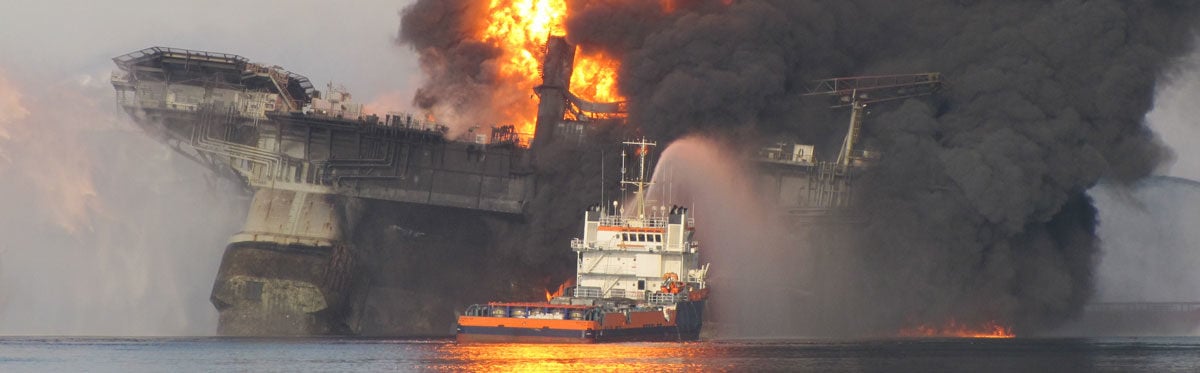
He is also correct that “complicated regulation may be a nice idea in principle but in practice it never works”. Regulators get captured by the people they are supposed to be regulating (as now illustrated in the oil and gas industry); this is “not unusual; it happens all the time”.
Fama has obviously considered just letting big banks fail (“I would have been for that all along”), but he recognizes that this cannot work in our political realities – governments will step in and make bail for banks when there is serious trouble. And, as Senator Ted Kaufman pointed out in his exchange with Senator Mitch McConnell, allowing the collapse of huge banks is a recipe for turning crisis into catastrophe.
Fama argues “the only solution is to raise capital requirements of these firms dramatically,” maybe up to 40-50 percent, which is an idea we have also advanced. It’s an interesting question whether this by itself would take the failure of mega-banks completely off the table – that would probably depend on the extent to which they were allowed to game the system, for example with risk taken through derivative positions against which they hold too little capital.
Still, Fama is thinking along exactly the right lines – and this is further confirmation that the consensus on big banks is shifting.
If implemented properly, capital requirements of the kind he proposes would essentially force the largest six or so banks today to become much smaller. Given that capital requirements are set by regulators, who claim to be pro-market, they should take careful note of Fama’s views – and look for ways to implement a tough version of this approach.
Like or Dislike:
2
0
10th January 2011 at 12:34 pm
Kill Bill says:
Well-loved. Like or Dislike:
10
0
10th January 2011 at 12:46 pm
Smokey says:
All the big banks eat shit. But have no fear, they’ll get theirs before this shit is over. The top brass deserve to be in prison taking it up the ass from Bubba. My guess is that most of the big bank criminals do not have the foresight or prescience to stash NOW their extorted bonuses, aka depositor and taxpayer money. As a result of their shortsightedness, when TSHTF, they’ll be dumpster diving and eating Spam, Vienna Sausages, and starfish. All those cocksuckers can eat my asshole.
Well-loved. Like or Dislike:
7
1
10th January 2011 at 6:47 pm
Smokey says:
KB—I gave you a thumbs up for that Einstein quote. You may as well pull out your 3″ and start wailing away, because it’s the last thumbs up you get from me.
Like or Dislike:
1
0
10th January 2011 at 6:50 pm
Kill Bill says:
Gee Smokey, Im a bit concerned about you peering into the neighbors window and looking at his junk with a ruler but I have to admit that no more pollex ups from you has caused me to fall out of my computer chair, knees into ribcage wrapped by sinewy arms, heaving great sobs while crocodile tears stream down my angelic face knowing I will never be the same without your most desired approval.
Well-loved. Like or Dislike:
6
0
10th January 2011 at 6:55 pm
Opinionated Bloviator says:
The era of TBTF is drawing to a close regardless of the wishes of Wall Street and their enablers in the Administration and Congress. The second Wall Street bailout and the resulting civil chaos will plunge the United States into a crisis it may not survive. There are no TBTF banks in Somalia, Zimbabwe or Argentina.
Like or Dislike:
2
0
10th January 2011 at 9:11 pm