
In case you were wondering, you are the cattle being led to slaughter. Kunstler gets it.
Cattle Drive
By James Howard Kunstler
on February 4, 2013 8:09 AM
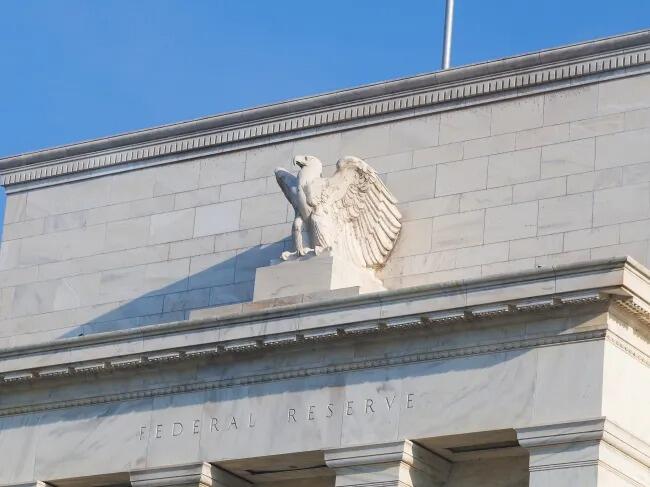
How hilarious is the Federal Reserve’s cattle drive of cash money (i.e. “liquidity”) into the stock markets? I’ll tell you: if that cash is outflow from bonds that pay ZIRP interest rates, then this attempt to stampede investment into the stock market is only going to succeed in ravaging the bond market and by extension the credibility of the dollar, the US banking cartel, and then the world financial system as a whole.
If bond-dumpers rush into stocks, then who are the next bond buyers at ZIRP? The USA can’t keep going without continuous bond selling. Somebody has to buy the darn things. The Federal Reserve is now buying around 70 percent of US issue — a lot of it via secondary market pass-thru shenanigans involving “Primary dealers” (a.k.a. Too Big To Fail banks, who get to cream off a premium when they flip bonds to the Fed — tidy little racket). If the other 30 percent of issue can’t find willing buyers at ZIRP then interest rates will have to go up. If interest rates go up, then interest paid out on bonds (that is “debt service”) by the US government will go up catastrophically, because the aggregate debt is so colossal and most of the debt is short term, meaning that in a post-ZIRP world the interest rate ratchets up automatically every 13 weeks as bonds roll over. The US will then only be able to pretend that it can service the debt at higher interest rates. Everybody in the world will recognize this — surely only increasing the velocity of the stampede away from bonds. The question is: how long can pretending to service debt go on before it is just called by it’s real name: default? Or, if countered with additional furious computer “money” creation: hyperinflation? Either way, of course, you end up broke.
This cattle drive into stocks is strictly a political gambit. The cattle are being driven to the slaughterhouse. It’s discretionary strategic national financial suicide. They’re driving up the stock markets for cosmetic purposes, to make it appear that an economic recovery is going on, and with the aim of setting in motion a self-reinforcing financial feeding frenzy in this rush to “equities.” By the way, in case my manner seems didactic today I am attempting to define my terms as I go along because most other financial bloggers seem to assume that ordinary people understand all their jargon, which I am quite sure they do not.
Returning to my point… the Fed and their auditors on Wall Street and in government, are jacking up the stock markets in the hopes of stirring up “animal spirits,” as the financial psychologists say, to put over the story that it equals a vibrant economy — which is nonsense, of course, to anyone who shoots a casual glance at the economic wreckage all around them. Anyway, since the stock market action these days is dominated by high frequency trading robots running on algorithms, where exactly would animal spirits even factor in? If anything the absence of real animal spirits in this action also implies the absence of its counterpart, animal survival instinct, of which human intelligence is an order. What can come of stirring up animal spirits among robots? A train wreck is exactly what.
Now, I ask you: at a moment in history when vast interlinked global financial markets have never been so unstable, so primed for unintended consequences courtesy of the diminishing returns of technology, so ripe for a massive, cascading “accident,” is it a prudent thing to fuck around with such crude PsyOps?
One other factor outside pure financials assures that US economic performance will remain impaired (that is, the kind of economic activity we regard as “normal” (suburban sprawl building, credit card “consumer” spending): the price of oil, which is inching up to the $100-a-barrel hashmark. Apparently that shale oil bonanza we hear so much about has not left the USA swimming in cheap oil. As a general principle, it’s probably safe to say that an oil price above $80 crushes the US economy. It drives up the cost structure of just about everything we make, do, or sell here, but of course the primary things that go up in price are food and motor fuel.
Hence, it’s tragically ironic that — getting back to official financial PsyOps — that one of the primary motives for the Fed keeping interest rates super-low in the first place (apart from enabling wild fiscal irresponsibility in government) has been to promote the housing sector — because in the reality of our time “housing” translates into building more suburban sprawl. How smart is it to promote more suburban sprawl at a moment in history when there’s no more cheap oil?
It is this kind of stupendous foolishness that is putting the USA on the path of an epochal systemic collapse.
Superbowl addendum:
Did anyone notice how violent and psychotic the Superbowl advertising was this year? An Oreo commercial that depicted a mob of nerds destroying a library — huh? The Doritos spot where “Daddy” and his male buddies transform themselves into an insane clown posse of cross-dressers. The Fast and Furious 6 trailer featuring the destruction of every vehicle known to man and a few office buildings, too. The third-quarter power failure was a neat harbinger of things-to-come in the Most Exceptional United States of America. Party on, peeps!
The Kunstlercast podcast is back online all y’all! This week: interview with Nicole Foss of The Automatic Earth.com


Nonanonymous says:
The Doors and Apocalypse Now come to mind.
The Redux version, of course!
How will we manage without the fed and the feds running the show?
I watched an interesting mini series this weekend with the wife, Hatfields & McCoys, from the History channel.
It occurred to me the revisionist history written since the Civil War, that Lincoln freed the slaves as an act of war. That slaves have been freed by non-violent means in other modern societies, and that Lincoln rose to prominence as a railroad lobbyist, and could have cared less for the plight of the american slave, only in securing revenue and consolidating power in the federal government.
We see how well that’s worked out.
There is a chief conspirator, his name is Satan and the Devil. Decentralization is the key to underpinning a new society. Any attempts at centralized power beyond that which is required to subdue a common threat should be regarded as corrupt and suspect.
See you on the other side.
Like or Dislike:
3
1
4th February 2013 at 10:09 am
Steve Hogan says:
Kuntsler actually makes some sense with his take of the bond market. A stopped clock?
His continued insistence that urban sprawl is the root of all evil makes me wonder why he’s obsessed with packing us into cities. The last place you want to be when the bond market pops and society unravels is in a major metropolitan area.
I suspect the author knows this. In fact, I suspect he’s got himself a place well away from the city when the crap hits the fan. Hypocrite.
Like or Dislike:
3
2
4th February 2013 at 10:22 am
OF says:
I wonder what happens with rising interest rates if the Fed like owns whatever 60-70% of the issues? Wouldn´t that have to be calculated, too?
Like or Dislike:
0
0
4th February 2013 at 10:52 am
Eddie says:
JHK lives in rural upstate NY. I don’t think he wants to pack people into cities, but just believes that the suburbs are living on borrowed time. I’m not so sure.
I was wondering if he is working on his garden. Last year I think he tied me for last place on growing food. I guess it’s too early up there to do much.
The bond market has been set to implode for two years, but we’ve been saved, because it’s worse in Europe ( and Japan) than it is here. If either one or both of those situations gets worse, it will ( paradoxically) make our bond yields fall yet again. Too many variables in that equation to go short the long bond, even now, imho.
Like or Dislike:
1
0
4th February 2013 at 11:02 am
Olga says:
Self-sufficient, decentralized towns with a strong local economy where more of the money is invested and circulates locally and less is siphoned/skimmed off to the black hole of global trans-nationals corporations never to be seen again by the likes of you and me is what I think JHK means.
Suburbs were never “towns” – but as the overall population of an area grew the closer-in suburbs became more like neighborhoods within the original town and the infrastructure more town-like and the economy more local.
As the suburb McMansion mania grew – and people decided to drive till they qualified – we now have an outer ring of suburbs that are almost wholly corporate dependent.
A car is required, there is no mass transit and every dollar spent within the corporate BIG BOX retail oasis (at every major intersection) filled with all the corporate restaurants vanishes into corporate bank accounts – only to minimally reenter the arena through the service wages of those employed by the corporate BIG BOX oasis monsters.
I believe these are the suburbs that JHK rails about.
Well-loved. Like or Dislike:
10
0
4th February 2013 at 11:25 am
AWD says:
Good analysis of the bond market. Interest rates are pretty low, and should be at 5%, which would be catastrophic.
A nice illustration of Bernake’s manipulation in action:
Well-loved. Like or Dislike:
5
0
4th February 2013 at 1:28 pm
Makati1 says:
The burbs AND cities are going to be death traps in the years to come. Population will be reduced by one means or another in both locations. The burbs will be inaccessible without oil and the cities will be locked down and controlled by the government first and then gangs when the government dissolves. Those gangs will roam the nearby countryside as things get scarce and anyplace within 20 or so miles will be pillaged. Eventually the gangs will die out, but not before there is not much left that they can take.
Small towns in a farm area with rail access will be the best places to be in the initial stages. If you own a small farm within walking distance 3-5 miles, you should be able to survive. Now think about how many areas there are that fit that description and that most of them will not support more than 10,000 at best, and you can see what has to happen to make that possible. Population reduction.
Timeline: Your guess is as good as mine, but I don’t think it will be later then 2050 and probably much much sooner.
Like or Dislike:
2
0
4th February 2013 at 9:50 pm
Llpoh says:
I do not really know where to post this, but it is a quote from the editors of the NY Times, in defense of continued government spending:
“Congress should be thinking about ways to accelerate the economy, instead of remaining preoccupied with a short-term deficit.”
I have never, and I mean never, read anything so appallingly stupid in my entire life. Short-term deficit? The deficit is what, seventeen trillion overall and one and a half trillion per year, and they have the gall to call that “short-term”.
The motherfuckers need to be horsewhipped for posting such outrageous lies.
Well-loved. Like or Dislike:
5
0
4th February 2013 at 10:01 pm
bigargon says:
I can see this scheme go on for sometime before the bottom completely falls out. Ultimately i could see the Fed buy close to 100% of bond issue, while the big banks sit on their piles of Fiat, like the dragon Smaug in the Hobbit.
The weak link is the state governments. Increasingly state government (often with balance budget provisions) are in debt each year. This has been a problem with my home state of Connecticut, year after year,they over estimate revenues and underestimate expenses. I could see a future where the Fed starts buying up state debt too.
This may go on for sometime but it can’t go on forever.
Like or Dislike:
3
0
4th February 2013 at 7:40 am