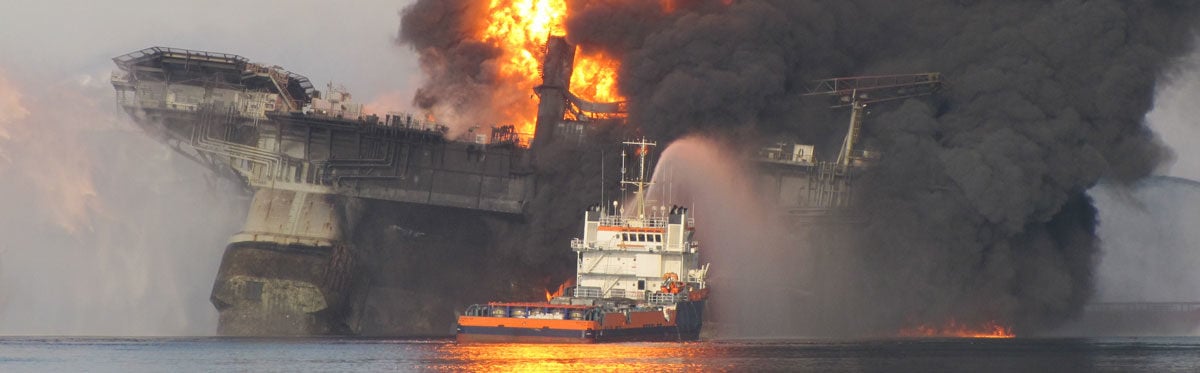

IT’S CALLED PEAK

6 comments

Posted on 30th April 2013 by Administrator in Economy |Politics |Social Issues

,

Oil prices were $20 per barrel in 2002. Prices today are over $90 per barrel. Why wouldn’t all Latin American countries be ramping up their oil production to take advantage of these high prices? They didn’t have a lost decade of oil production. Many new reservoirs of oil were discovered. New wells were drilled. But existing wells depleted at the same rate that new wells were brought online. This is called peak oil. It doesn’t mean we are running out. It means production and consumption have reached an equilibrium level. Guess what happens next?

Latin America’s ‘lost’ decade in oil production

April 30, 2013, 10:11 AM

By Claudia Assis

IEA, Raymond James estimates

Latin America went through a lost decade in terms of oil output, with  production gains in Brazil and Colombia matched by declines in Mexico and Venezuela, analysts at Raymond James said in a report Monday.

Other countries netted zero growth as well. Brazil’s output rose 41% in 2002-2012, up 619 million barrels of oil a day, and Colombia’s production rose 62%, up 363 million barrels of oil a day. Production in Mexico fell 19%, while Venezuela’s was down 13%.

In the same period, production in the U.S. rose 14%, the analysts said. The Organization of the Petroleum Exporting Countries’ production rose 29%.

Latin America’s production has fallen every year since 2002 with the exception of  2011. And, unlike Iraq, Libya, Syria, or South Sudan, there are no exceptional circumstances to blame, the Raymond James analysts said.

Most of the problems stem from the policies of Venezuela’s former President Hugo Chavez, who died last month, and a political shift to the left as well by other energy-producers such as Argentina, Bolivia and Ecuador.

The leftward wave “has created a backdrop for depressingly weak energy investment, and hence production. … In all of these cases, governments have followed a set of intensely nationalistic, anti-business energy policies with entirely predictable consequences,” the analysts said.

Meanwhile, Brazilian production has stagnated over the past few years. That reflects at least in part “problematic” execution by the state-controlled oil company, Petroleo Brasileiro SA. Large-scale “energy infrastructure projects have always been prone to delays (and cost overruns),” and offshore projects are riskier. All of Brazil’s major oil developments are offshore.

THE LONG DECLINE

7 comments

Posted on 14th April 2013 by Administrator in Economy |Politics |Social Issues

,

Gail Tverberg http://ourfiniteworld.com/ with another thoughtful piece that reveals those in the MSM and on Wall Street to be liars and frauds when it comes to our true energy situation. Even with the entire world in recession, the price of oil is above $90 per barrel. The energy consumption per capita in the US/Japan/EU peaked in 1973. We continue to use less oil, but only due a collapse in commercial activity. This continued energy usage decline reveals the storyline of economic recovery to be false. The rest of the world continues to increase their energy usage and will continue to do so. When the current recession deepens further, prices will decline further, but the Canadian tar sands and the Bakkan shale oil require prices above $80 for them to be profitable. This puts a floor on how low prices can go. The government and MSM have an agenda to keep the public ignorant of the true long-term energy situation. No matter how you cut it, there is no easy way out.

Peak Oil Demand is Already a Huge Problem

We in the United States, the Euro-zone, and Japan are already past peak oil demand. Oil demand has to do with how much oil we can afford. Many of the developed nations are not able to outbid the developing nations when it comes to the world’s limited oil supply. A chart of oil consumption shows that oil consumption peaked for the combination of the United States, EU-27, and Japan in 2005 (Figure 1).

Figure 1. Oil consumption by part of the world, based on EIA data. 2012 world consumption data estimated based on world "all liquids" production amounts.

Figure 1. Oil consumption by part of the world, based on EIA data. 2012 world consumption data estimated based on world “all liquids” production amounts.

We can see an even more pronounced version of this pattern if we look at the oil consumption of the five countries known as the PIIGS in Europe: Portugal, Italy, Ireland, Greece, and Spain. All of these countries have had serious declines in oil consumption in recent years, as high oil prices have impeded their economies.

Figure 2. Oil consumption for Portugal, Italy, Ireland, Greece, and Spain, based on EIA data.

Figure 2. Oil consumption for Portugal, Italy, Ireland, Greece, and Spain, based on EIA data.

Oil consumption for the PIIGS in total hit its highest level in 2004, before the decline began. Peak oil consumption by country varied a bit: Portugal, 2002; Italy, declining since 1995; Ireland, peak in 2007; Spain, peak in 2007; Greece, peak in 2006.

Peak demand is very much related to jobs. Peak oil demand occurs when a country is not competitive in the world market-place, and because of this, loses industry and jobs. One reason this happens is because the country’s energy cost structure is not competitive in the world market-place. With the run-up in oil prices starting about 2003, oil is by far the most expensive of the traditional energy sources we have available today. Countries that use a large percentage of oil in their energy mix can be expected to have a hard time competing, because of oil’s higher cost.

Figure 3. Oil consumption as percentage of energy consumption for selected countries, based on BP's 2012 Statistical Review of World Energy.

Figure 3. Oil consumption as percentage of energy consumption for selected countries, based on BP’s 2012 Statistical Review of World Energy.

Anything else that is done which raises costs for businesses will also have an impact. This would include “carbon taxes,” if competitors do not have them, and if there is no tariff on imported goods to reflect carbon inputs.

High-cost renewables can also have an adverse impact, regardless of whether the cost is borne by businesses, consumers or the government.

  • If the cost is borne by businesses, those businesses must raise their prices to keep the same profit margins, and because of this become less competitive.
  • If the cost is borne by consumers, those consumers will cut back on discretionary expenditures, in order to balance their budgets. This is likely to mean  a cutback in demand for discretionary goods by local consumers.
  • If the government bears the cost, it still must pass the cost back to businesses or consumers, and thus reduce competitiveness because of higher tax costs.

This importance of competitiveness holds, no matter how worthy a given approach is. If costs were “externalized” before, and are now borne by the local system, it makes the local system less competitive. For example, putting in proper pollution controls will make local industry less competitive, if the competition is Chinese industry, acting without such  controls.

One issue in competitiveness is wage levels. Wages in turn are related to standards of living. In a global economy, countries with higher wage levels for workers, and higher benefit levels for workers (such as health insurance and pensions) will be at a competitive disadvantage. Countries that use coal as their prime source of energy will be at an advantage, because workers’ wages will tend to “go farther” in heating their homes and buying electricity.

Countries that are warm in the winter will be at a competitive advantage, because homes don’t have to be built as sturdily, and don’t have to be heated in winter. Workers can commute by bicycle even in the coldest weather.

Energy usage (all types combined, not just oil) is far higher in cold countries than it is in warm wet countries. Countries that extract oil also tend to be high users of energy.

Figure 4. Per capita energy consumption for selected countries for the year 2010, based on EIA data.

Figure 4. Per capita energy consumption for selected countries for the year 2010, based on EIA data.

The difference in per capita energy usage among the various countries is truly astounding. For example, Bangladesh’s per capita energy consumption is slightly less than 2% of US energy consumption. This difference in energy consumption means that salaries can be much lower, and thus products made in Bangladesh can be much cheaper, than those made in the United States. This is part of our competitiveness problem, even apart from the energy mix problem mentioned earlier.

In my view, globalization brought on many of our current problems. Perhaps globalization could not be avoided, but we should have foreseen the problems. We could have put tariffs in place to make a more level playing field.  See my post, Twelve Reasons Why Globalization is a Huge Problem.

Inadequate world oil supply isn’t exactly the problem. The issue is far more that the price of oil extraction is rising.  The price of oil extraction is rising for a variety of reasons, an important one being that we extracted the easy to extract oil first, and what is left is more expensive to extract. Another issue is that oil exporters now have large populations that need to be kept fed and clothed, so they don’t revolt. This is a separate issue, that raises costs, even above the direct cost of extraction. There is no reason to believe that these costs will level off or fall, no matter how much oil the US produces using high-priced methods, such as fracking.

When oil prices rise, wages don’t rise at the same time. In fact, in the US there is evidence  that wages stagnate when oil prices are high, partly because fewer are employed, and partly because the wages of those employed flatten.

Figure 5. High oil prices are associated with depressed wages. Oil price through 2011 from BP’s 2012 Statistical Review of World Energy, updated to 2012 using EIA data and CPI-Urban from BLS. Average wages calculated by dividing Private Industry wages from US BEA Table 2.1 by US population, and bringing to 2012 cost level using CPI-Urban.

Figure 5. High oil prices are associated with depressed wages. Oil price through 2011 from BP’s 2012 Statistical Review of World Energy, updated to 2012 using EIA data and CPI-Urban from BLS. Average wages calculated by dividing Private Industry wages from US BEA Table 2.1 by US population, and bringing to 2012 cost level using CPI-Urban.

The countries that are most affected by rising oil prices are the countries that use oil to the greatest extent in their mix of energy products. In Figure 3, that would be the PIIGS. The rest of the US, EU-27, and Japan would be next in line.

When oil prices rise, consumers need to balance their budgets. The price of oil products and food rises, so they cut back on discretionary items.  Their smaller purchases of discretionary goods and services means that workers in discretionary sectors get laid off.

Businesses find that the price of oil used in manufacturing and shipping their products has risen. If they raise the sales price of the goods to reflect their higher costs, it means that fewer people can afford their products. This too, leads to cutbacks in sales, and layoffs of workers. Sometimes businesses decide to outsource production to a cheaper country, or use more automation, as a way of mitigating the cost increases that higher oil prices add, but automation or outsourcing also tends to reduce US wages.

The net effect of all of these changes is that there are fewer workers with jobs in the countries with high oil usage. This reduces the demand for oil in the high oil usage countries, both from business owners making goods and from the consumers who might use gasoline to drive their cars. This price mechanism is part of what leads to the oil consumption shift we see in Figure 1.

We are dealing with is close to a zero-sum game, when it comes to oil supply. The amount of oil that is extracted from the ground is almost constant (very slightly increasing for the world in total). If prices stayed at the low level they were in the past (say $20 barrel), there would not be enough to go around. Instead, higher prices redistribute oil to countries that can use it manufacture goods at low overall cost. Workers in factories making these goods are then able to afford to buy goods that use oil, such as a motor scooter.

Citigroup recently released a report titled, “Global Oil Demand Growth, – the End is Nigh.” Its subtitle says,

The substitution of natural gas for oil combined with increasing fuel economy means oil demand is approaching a tipping point.

This is out-and-out baloney, for a number of reasons:

1. There are way too many of “them” compared to the number of “us,” for energy efficiency to make even a dent in our problem.

2. When we look at past oil consumption, changes in vehicle energy efficiency did not make a big difference.

3. Substituting natural gas for oil still leaves cost levels for the US, Europe, and Japan very high, compared to those for the rest of the world, where little energy is used.

4. There are really separate markets in many parts of the globe. Our market is collapsing because of high price. Perhaps increased efficiency and natural gas substitution will help low-cost producers until they reach a different limit of some sort.

Let’s look at these issues separately.

There are way too many of “them” relative to us, for energy efficiency to even make a dent in our problem.

If we look at world population, this is what we see:

Figure 6. World population split between US, EU-27, and Japan, and the Rest of the World.

Figure 6. World population split between US, EU-27, and Japan, and the Rest of the World.

Using a ruler, we could probably make fairly reasonable projections of future population for each of these groups.

If we look at per capita oil consumption for the two groups separately, there is a huge disparity:

Figure 7. Per capita oil consumption separately for the group US, EU-27, plus Japan, and for the rest of the world, based on BP's 2102 Statistical Review of World Energy, and population statistics from EIA (since 1980) and Angus Maddison data. (earlier dates).

Figure 7. Per capita oil consumption separately for the group US, EU-27, plus Japan, and for the rest of the world, based on BP’s 2102 Statistical Review of World Energy, and population statistics from EIA (since 1980) and Angus Maddison data. (earlier dates).

Per capita oil consumption for the EU, US, and Japan group peaked in 1973–a very long time ago. In recent years, it has been drifting down fairly rapidly, just to keep up with a slight per capita rise in oil consumption of the Rest of the World. Even with recent changes, per capita oil consumption of the EU, US and Japan group is more than 4.5 times that of the rest of the world.

If cars were made more efficient, more people could afford them. The market for cars is unbelievably huge, compared to today’s market, if costs could be brought down. Furthermore, gasoline accounts for less than half of US oil consumption. Even if efficiency were improved to allow cars to use half as much fuel, it would save a little less than one-fourth of current oil consumption. How far would this oil go in satisfying the needs of 6 billion other people–and growing every year?

When we look at past oil consumption, changes in vehicle energy efficiency did not make a big difference.

If we look at per capita oil consumption in the US, split between gasoline and other oil products, we see that the big drop in oil consumption came from the drop in other oil products–that is the commercial and industrial part of US oil consumption.

Figure 8. US per capita consumption of oil products, split between gasoline and other. Total consumption from BP's 2012 Statistical Review of  World Energy. Gasoline consumption from EIA. (Amounts include biofuels.)

Figure 8. US per capita consumption of oil products, split between gasoline and other. Total consumption from BP’s 2012 Statistical Review of World Energy. Gasoline consumption from EIA. (Amounts include biofuels.) Difference by subtraction.

The amount of fuel used for gasoline has stayed in the 10 to 12 barrels a year per capita band, since 1970, in spite of huge improvements in vehicle efficiency.

I recently wrote a post called Why is US Oil Consumption Lower? Better Gasoline Mileage? In it, I looked at the decrease in US oil consumption between 2005 and 2012. I concluded that the majority of the decrease in consumption was due to a drop in commercial use. Only 7% was due to an improvement in miles per gallon for gasoline powered vehicles.

Substituting natural gas for oil still leaves the US (as well as Europe and Japan) very high priced, compared to the rest of the world, that doesn’t use much energy.

Living in the US, Europe or Japan, it is  hard to get an idea of the cost structure of the rest of the world. We are so far above the cost structure of the rest of the world that substituting natural gas for oil would do little to fix the situation.

Figure 9. Photo I took of an auto-rickshaw while visiting India in October 2012. A total of 10 of us (including driver) traveled for several miles in a three-seated version of one of these. Those of us on the edges held on tightly to the frame, because there was not room for all of us.

Figure 9. Photo of an auto-rickshaw I took while visiting India in October 2012. A total of 10 of us (including driver) traveled for several miles in a three-seated version of one of these. Those of us on the edges held on tightly to the frame, because there was not room for all of us.

We can also debate how much substitution of natural gas will actually do, and in what timeframe. In the US, natural gas is temporarily very cheap. But it costs more to extract shale gas than the market currently pays, in many areas. Also, a recently University of Texas study showed that Barnett Shale was past peak production, if prices do not rise.

There are really separate markets in many parts of the globe. Our market is collapsing because of high price. Perhaps increased efficiency and natural gas substitution will help low-cost producers, until they reach a different limit of some sort.

When a country is not competitive, it is not just oil consumption that drops, but consumption of other energy products as well.  If we look at the per capita energy consumption of the US, EU-27, and Japan combined, we see that non-oil energy consumption per capita reached its peak in 2004, and is now declining (Figure 10, below).  If consumers are too poor to buy oil products, they are also too poor to buy products made with other types of energy.

Figure 10. Per capita consumption for the sum of the EU-27, US, and Japan, based on BP's 2012 Statistical Review of  World Energy.

Figure 10. Per capita consumption for the sum of the EU-27, US, and Japan, based on BP’s 2012 Statistical Review of World Energy.

The Rest of the World followed a very different pattern of energy consumption. Non-oil consumption soared, on a per capita basis. Oil consumption also increased on a per capita basis.

Figure 11. Per capita energy consumption for the Rest of the World, based on BP's 2012 Statistical Review of World Energy.

Figure 11. Per capita energy consumption for the Rest of the World, based on BP’s 2012 Statistical Review of World Energy.

More detailed data shows that the big increase in non-oil consumption was a huge rise in coal consumption, after China was admitted to the World Trade Organization in December 2001.

How does peak oil demand work out in the end?

I would argue that lack of competitiveness in world markets is a limit that the US, EU-27 and Japan are hitting right now, but at slightly different rates. EU-27 now seems to be ahead in the race to the bottom, partly because its combined currency. I wrote a post in March 2012 called Why High Oil Prices Are Now Affecting Europe More Than the US, explaining the situation.

It seems to me, though, that a big piece of the problem with lack of competitiveness gets transferred to the governments of the affected countries. This happens because collection of tax revenue lags, because not enough people are working, and those who are working are earning lower wages. At the same time increased payouts are needed to stimulate the economy, and to provide benefits to the many without jobs.

Governments increase their debt to meet the revenue shortfall. They reduce interest rates to record-low levels, to stimulate the economy.  They also use Quantitative Easing, or “printing money” to try to lower long-term interest rates, and to try to make their exports more competitive. Unfortunately, these actions do not solve the basic structural problem of high and rising world oil prices, and the fact that these rising prices make their economies increasingly less competitive in the world marketplace.

One possible way I see of the current situation working out is that the total energy consumption (including all types of energy products, not just oil) of the EU, US and Japan will continue to fall, as high-priced oil continues to erode our competitive position in the world marketplace.

Figure 12. One view of future energy consumption for the EU-27, US, and Japan. Historical is based on BP's 2012 Statistical Review of World Energy.

Figure 12. One view of future energy consumption for the EU-27, US, and Japan. Historical is based on BP’s 2012 Statistical Review of World Energy.

The slope of the decline is based on the type of decline experienced by the Former Soviet Union, in the years immediately following its collapse. This pattern might reflect a combination of different patterns for different countries. Greece and Spain, for example might continue to fall quite quickly. The US might lag the EU in the speed at which problems take place. The likely path seems downward, because any action taken to fix the government gap between income and expense can be expected to have a recessionary impact, and thus have an adverse impact on energy consumption.

The Rest of the World is now growing rapidly, but at some point they will start reaching limits. One of these limits will be lack of an export market. Another will be lack of spare parts, because businesses in the US, Europe and Japan are failing for financial reasons. Some of these limits will relate to pollution and lack of fresh water. The effect of these limits will also be to raise costs. For example, a shortage of water can be worked around through desalination, but this raises costs. Lack of spare parts can be worked around by building a new plant to make the spare part. Pollution problems can be mitigated by pollution controls, but these add costs. These higher costs, when passed on to consumers will also lead to a cutback in demand for discretionary goods, and the same kinds of problems experienced in oil exporting nations. Thus, these countries will also have “Peak Demand” problems, because of rising prices, related to limits they are reaching.

I don’t know exactly how soon the Rest of the World will hit limits, but given the interconnectedness of the world system, it would seem to be within the next few years. Figure 13 shows one estimate of how this may occur.

Figure 13. One view of energy consumption for the Rest of the World. Historical data is based on BP's 2012 Statistical Review of World Energy.

Figure 13. One view of energy consumption for the Rest of the World. Historical data are based on BP’s 2012 Statistical Review of World Energy.

Here again, individual countries may do better than others. Countries with little connectedness to the world system (for example, countries in central Africa) may have fewer problems than others. Of course, their energy consumption (of the type measured by the EIA or BP) is very low now. They may use cow dung and fallen branches for fuel, but these are not counted in international data.

Figure 14, below, shows the sum of the amounts from Figures 12 and 13. Thus, it gives one estimate of  future world energy consumption based on Peak Demand considerations.

Figure 14. One view of future energy consumption for the world as a whole. History is based on BP's 2012 Statistical Review of World Energy.

Figure 14. One view of future energy consumption for the world as a whole. History is based on BP’s 2012 Statistical Review of World Energy.

If there is a silver lining to all of this, it is that world CO2 emissions are likely to start falling quite rapidly, because of Peak Oil Demand. World CO2 emissions could quite possibly drop below 20% of current levels before 2050. In the scenario I show, energy consumption drops faster than forecasts such as those put out by the Energy Watch Group. Such forecasts do not take into account financial considerations, so are likely overstated.

The downside of Peak Oil Demand is that the world we live in will be very much changed. Population levels will likely drop, indirectly because of serious recession, job loss, and cutbacks in government benefits. The financial system will need to be completely revised, because debt financing will make sense much less often than today. In fact, in a shrinking world economy, money can no longer act as a store of value. There no doubt will be some people who survive and prosper, but their lives will likely be very different from what they are today.

THE GREAT FRACKING FRAUD

13 comments

Posted on 3rd April 2013 by Administrator in Economy |Politics |Social Issues

, , , , , , ,

I love when the MSM storyline is OBLITERATED by the alternate truth telling media. The MSM cares nothing about facts. Their job is to sedate the masses with propaganda, like the storyline about 100 years of oil under our feet. They peddle the bullshit storyline about the U.S. becoming an oil exporter in the next 5 years when we currently import 10 million barrels per day. Every drop of oil and every cubic foot of gas is accessible at a certain price. One problem. Once the price reaches a certain level, our economy collapses. So Solly.

Those in power know the true situation. They and their MSM mouthpieces are lying to the American people because they have no solution to decreasing supplies and higher prices. But you now know why we refuse to leave the Middle East and are now very interested in Africa.

Read the part in the article about the Bakken oil fields and how quickly they deplete. If we are swimming in Bakken oil and our consumption is going down, why is oil selling for $96 a barrel?

The Myth Of U.S. Energy Independence

Submitted by Alan von Altendorf,

Let’s begin with the Federal Reserve. Adding $1 trillion a year to its balance sheet sounds like big money. The Congressional Budget Office recently projected an $845 billion federal deficit in 2013. States and localities will likewise disburse more than they take in taxes — so altogether let’s say it adds up to $2+ trillion of fiscal and monetary stimulus, to prop up asset values and hopefully inspire U.S. households to borrow more and spend more. Good news for investors, right?

The fly in the ointment is energy. Global oil supply has plateaued and more demand will push up prices. Americans always think of themselves first, but we’re not alone in consumption of energy. China, Japan, Korea, India, the EU, and exporters like Saudi Arabia and Russia are consumers, too. Last week Britain came within days of running out of natural gas until three LNG supertankers arrived from Qatar. Those cargoes were held, waiting to see who would pay the highest price. It was freezing cold in Britain, a pipeline from Belgium went down, and the Brits bid 30% above market for the LNG cargoes to stave off power blackouts, misery and death. Price was no object. They had to have emergency supplies and it’s a seller’s market.

That’s the ugly truth about oil & gas, flat supply and high demand.

Oil inventories in particular are extremely tight. Spare production and market rigging are easily disproved. It’s a competitive global market with thousands of brokers, shippers, production operators and service companies. OPEC quotas don’t mean squat. Everyone is pumping as much as they can.


Oil matters first, most, and always because it powers 95% of U.S. transportation. Farm to market. Bunker fuel. Passenger cars. Jet aircraft. Heavy equipment for construction and mining. Asphalt for roads. Lubricants that every machine, every pump, everything with wheels has to have, including a commercial fleet of 350,000 big rigs and 25,000 diesel locomotives. Oil is our industrial lifeblood.

Are you thinking about natural gas? Good. Much of it came from oil fields. It got separated at the platform and piped away as a byproduct of oil production. There are numerous conventional gas fields in Texas, Louisiana, and the Outer Continental Shelf, all of them historically owned and operated and bankrolled by oil companies. Oil paid the freight for gas development.

Of the top 10 U.S. gas producers, oil companies currently deliver 12 Tcf a year, compared to 8 Tcf from big shale frackers. And there’s a dirty secret about shale gas that no one wants to discuss. Bankruptcy. Horizontal fracking for dry gas is a money-losing business. Huge sums were invested in 2008 when gas was north of $10 mmbtu. At the time no one bothered to calculate the “full cycle” cost of drilling and fracturing thousands of pricey horizontal wells.


Throughout 2009 and 2010, shale drillers played hide the sausage with hedge contracts, until their bankers and investors saw an ocean of red ink operations. Petrohawk lost $1 billion and needed a particularly dumb white knight to rescue it, which ultimately cost BHP’s CEO Marius Kloppers his job. I covered the BHP-Petrohawk acquisition when it was announced (link) with a follow-up (link). If you examine any of the shale drillers’ financials, like Chesapeake, you’ll find the same green eyeshade heroics of hedging to cover operating losses in 2009-10.

My theory is that they kept drilling to impress unsophisticated investors and stay busy while praying prices would come back. Lets assume they were well hedged at $10/mcf. It still costs them $8/mcf to find and produce that gas, so with the spot price at $4, they are losing $4/mcf. However, they are making $6/mcf on their hedge, for a net of $2/mcf. So basically you have an extremely unprofitable gas company, tied to a very profitable trading / hedging operation. They should have cut their losses on the drilling and cashed in their hedges at $6/mcf… [but] eliminating drilling means cutting staff, so they kept going, even though it was foolish and they ended up destroying a lot of shareholder wealth. [Oil Drum comment]

Two years ago drilling cratered, except to hold acreage by production, and dry gas shale operators started offloading property to foreign investors who liked the idea of bagging hard currency mineral rights. China didn’t care if shale gas was a broken business model. It wanted the technology.

Chart adapted from Berman and Pettinger (2010)

Exxon’s purpose in acquiring shale driller XTO was to book reserves, not profits. “We are all losing our shirts,” Rex Tillerson told the Council on Foreign Relations last June. “We’re making no money [from gas production]. It’s all in the red.” Reserves replacement is a life or death problem for the oil majors. A quirk of accounting rules allow them to comingle assets and pretend that 6 mcf of proved gas reserves worth $20 at the wellhead = $100 barrel of Louisiana Light. As long as they don’t have to produce any of that unprofitable gas, it looks good on the balance sheet.

What’s happening at the majors is capitulation. Conventional gas production has been deliberately allowed to decline because there’s no money in it. But smaller shale players are stuck. They have to keep producing to service their mountain of debt, pay dividends, and pay themselves fat salaries. The next two charts tell a ghastly story. Conventional gas is down, money-losing shale production up.


Energy maven Michael Fitzsimmons recently wrote that “supply and demand are coming back into alignment. In addition to substantial growth in the electrical generation sector, natural gas is also making significant progress in the transportation sector.” [link] He expects a breakout to $5/mcf, once excess underground strorage is drawn down. Maybe so. But shale drillers need $8/mcf to break even, and the majors aren’t going to spend another dime drilling for conventional gas. Which brings us to Sean Hannity’s pie-in-the-sky reserves.

Mr. Hannity thinks shale gas is an inexhaustible resource.

With a steady supply of gas we’d be able to put people back to work… Environmentalists are unable to see that natural gas is not only more accessible, but more affordable. If America taps into its assets, we could become the world’s leading exporter of natural gas.

[Hannity nationally sydicated radio broadcast 3/12/13]

Assuming that the spot price for gas moves north of $6 it’s possible to see some more production. But how much, for how long? Forever? 100 years? — or less than only a dozen years, during which prices will have to gap higher as various consumers bid for increasingly scarce gas?


The U.S. does not have 100 years of natural gas supply. There is a difference between resources and reserves that many outside the energy industry fail to grasp… The Potential Gas Committee is the standard for resource assessments because of the objectivity and credentials of its members, and its long and reliable history. In its 2011 biennial report, three categories of technically recoverable resources are identified: probable, possible, and speculative. The President and many others have taken the P.G.C. total of all three categories (2,170 Tcf) and divided by 2010 annual consumption of 24 Tcf. Much of this total resource is in accumulations too small to be produced at any price, is inaccessible to drilling, or too deep to recover economically. More relevant is the Committee’s probable mean resources value of 550 Tcf of gas. [Berman, Feb 2012]


click to enlarge)

The future of natural gas is a long-term shortfall and significantly higher prices to bring production back.

I have long been puzzled by the economics of shale gas. I was never involved in shale, but was involved in drilling exploration wells in the Permian Basin. We stopped drilling for pure gas wells in 2009. We had a ten well project leased and ready to go when gas prices started collapsing. Our breakeven price was about $7/mcf, and $8 gave us a respectable profit. We drilled the first well, but put the rest on the shelf.

[B.J. Doyle]

The Bakken Bust

Another one of Sean Hannity’s brainless rants had listeners leaping for joy, because exponential fracking for oil in North Dakota, Montana, and the Texas Eagle Ford can produce an endless cornucopia of abundant, cheap U.S. gasoline, if we get those pesky environmentalists out of the way! America has so much shale oil that we could be the world’s Number One oil producer and exporter! Never have to import another barrel of oil from the Middle East!

Okay. Reality check.

Whereas conventional wells like those in the Thunder Horse (deepwater Gulf of Mexico sandstone) reservoir produce at a rate of 40,000 bpd, only 14 of the nearly 9,000 wells in the Bakken produce more than 800 barrels per day, and the average well produces only 52 bpd.

[Derik Andreoli, 12/12/11]


(click to enlarge)

Presently the estimated breakeven price for the average well in the Bakken formation in North Dakota is $80-$90/bbl. In plain language this means that presently the commercial profitability for new wells is barely positive. The average well now yields around 85 000 bbls during the first 12 months of production and then experiences a year over year decline of 40%. The recent trend for newer wells is one of a perceptible decline in well productivity.

[Rune Likvern, 1/1/13]


While production continues to ramp up daily, there is one part of western North Dakota where the excitement of oil has gone bust. Chesapeake’s attempt to find the southern edge of the Bakken is being described as the largest failure in drilling in the state since the 1980s…Tanks are there, collecting nothing. Well heads are in place, abandoned… Director of Mineral Resources for North Dakota, Lynn Helms said: ‘There’s only one well that’s made any measurable oil, and it’s about 10 percent oil at best, 90% water.’ Chesapeake invested $60 million in the prospect of hitting oil. That excludes money spent on leases. ‘Because all the drilling had been taking place north of there and the geological risk was zero, it made it look too easy. So in terms of the technology of drilling and fracking, well prepared, but in terms of geology probably not,’ said Helms.

[KXNet.com, 1/1/13]


With 55 to 85% yearly decline rates how are those investors going to look in five years; especially in places like the Bakken which have $10 million wells. Eagle Ford has dismal production (143 b/d)…Chesapeake got into the shale gas game early, and is now selling everything the company has to stay out of receivership. Decline rates were much higher than originally projected. The rest of the shale industry will find the same thing happening to them.

[TOD, 2/10/13]


(click to enlarge)

The government is going to be pretty damned disappointed and upset if unconventional oil turns out to be a colossal bust. And there is something funny about that EIA chart (above). Ignore the big purple blob of Tight Lower 48 and look closely at the black line and right hand scale. EIA thinks crude is going to $160 a barrel. No wonder DOE policy wonks expect shale drillers to poke around forever in marginal plays. 90% water cut sounds ok all of a sudden at $160 a barrel.

With Bernanke printing free money for the foreseeable future, and incredibly low HY rates of 5-6%, any wacky business plan is good to go, assuming that drilling contractors and completion companies don’t go bankrupt with Obamacare. I also doubt their ability to keep costs down in the future. Each horizontal completion needs 1 million gallons of fresh water and someplace to get rid of it after contamination by radioactive, poisonous and corrosive formation chemicals. But broadly speaking, cheap HY funding rocket fueled the shale boom, and in the near term I expect another round of free drinks on the Fed’s tab for North Dakota’s roughnecks. Yee-haw!

Former Kansas City Fed president and vice chairman of the FDIC, Thomas M. Hoenig, isn’t having any of it. “This system [of pumping liquidity into money center banks] distorts the market and turns appropriate risk-taking into recklessness,” he warned in a WaPo op-ed last Friday.

Well, duh. Obama is throwing billions at solar and biofuels. Recklessness is the order of the day, all day, every day, to make America “energy independent” and to save the planet, of course.

The U.S Department of Defense is the world’s largest consumer of refined petroleum — gasoline, diesel, and jet fuel — for which it pays about $3.00 a gallon because it buys tens of millions of gallons at a whack. But DoD is under tremendous pressure to “go green” and switch to biofuels. Here’s the price per gallon the Pentagon paid for algae, wax and peanut oil fuel. And they had a clear winner! Fat and sugar were a bargain at slightly over $25 a gallon.


Death By Regulation

I’m a very old fashioned, simple analyst. I look at the geology, the balance sheet, and the company management. One of Houston’s best is W&T Offshore (WTI) — and it’s a heartbreaker. Currently trading at a $14 handle, if you do the math on shareholder equity and common shares outstanding, it might be worth $7.

Let me repeat, so there’s no misunderstanding. W&T Offshore is a superb small company, with the right stuff subsurface and a terrific management team. Absolutely first class offshore operator. Very high rate of success. (Disclosure: No position long or short in WTI and no business relationship past or present with the company or any of its employees or managers.)

No question about WTI’s integrity. Reserves are audited by Netherland Sewell. If ever there was a minnow that deserved investor loyalty and a blank check to grow the business, it’s W&T Offshore. But I can’t recommend it as a buy, and it breaks my heart to say sell.

The succubus that’s draining WTI financially is regulation. The latest 10-K calmly explains why this excellent oil finder is hanging on by a thread. If you want to understand why U.S. conventional oil production is trending downward, year after year, this is why:

BOEM [Dept of Interior] may require any of our operations on federal leases to be suspended or terminated… Numerous governmental departments issue rules and regulations to implement and enforce such laws, which are often difficult and costly to comply with and which carry substantial civil and even criminal penalties for failure to comply… Environmental laws and regulations have been subject to frequent changes over the years, and the imposition of more stringent requirements could have a material adverse effect upon our capital expenditures, earnings or competitive position, including the suspension or cessation of operations in affected areas… The Comprehensive Environmental Response, Compensation, and Liability Act imposes liability, without regard to fault, on certain classes of persons that are considered to be responsible for the release of a “hazardous substance” into the environment… In addition, companies that incur liability frequently also confront third-party claims because it is not uncommon for neighboring landowners and other third parties to file claims for personal injury and property damage allegedly caused by hazardous substances or other pollutants released into the environment from a polluted site.

Just boilerplate? Not in WTI’s case.

The United States Attorney’s Office for the Eastern District of Louisiana, along with the Criminal Investigation Division of the EPA conducted a federal grand jury investigation beginning in late 2010 of environmental compliance matters relating to surface discharges and reporting on four of our offshore platforms in the Gulf of Mexico in 2009… Cameron Parish landowners filed suits in the 38th Judicial District Court against the Company and several other defendants unrelated to us… alleged that property they own has been contaminated or otherwise damaged by the defendants’ oil and gas exploration and production activities… During 2012, we settled claims with certain landowners and paid $10.0 million. We assessed the remaining claims to be probable and have accrued $1.3 million in our contingent liabilities… we cannot state with certainty that our estimates of additional exposure are accurate concerning this matter. On September 21, 2012, we were served with a complaint in a qui tam action filed under the federal False Claims Act by an employee of a Company contractor… A qui tam action is a lawsuit brought by a private citizen seeking civil penalties or damages against a person or company on behalf of the government for alleged violations of law. If the claims are successful, the person filing the suit may recover a percentage of the damages or penalty from the lawsuit as a reward for exposing a wrongdoing… The alleged environmental violations include allegations of discharges of relatively small amounts of oil… the same allegations involved in the federal grand jury investigation.

Anyone killed or injured? No. An oil slick? No. A few barrels spilled and a forgotten journal entry. If you’ve seen a video of an offshore drilling crew at work, it’s miraculous that a handful of men control hundreds of barrels of drilling mud and produced water, volatile poison gases that have to be flared or connected to an undersea pipeline, and thousands of barrels of flowing crude without spilling a drop.

A good company ruined — because a contractor blabbed to the Feds, knowing that it would pay him a fat “whistlebower” reward and civil suits would pay landowners miles away, without proof of damage to their land. Ready for full context? Natural seeps in the Gulf of Mexico spew 500,000 barrels of gooey oil and sticky tar, each and every year. Has absolutely nothing to do with WTI’s offshore operations.


(click to enlarge)

There is no hope whatsoever of so-called U.S. “energy indepedence” unless three things happen. Environmental rules have to be wound back to 1970 standards — in other words, disband the EPA and make civil plaintiffs show actual harm, not just hypothetical harm because someone goofed on a sheaf of mandated paperwork. Second, stop wasting taxpayer money on nonsense like $25 per gallon biofuel.

Third and most urgently, stop subsidizing Wall Street. Let the market decide what interest rates make sense, rewarding companies who can find and produce oil, instead of gorging themselves sick on artificially cheap junk bonds that money-losing shale swindlers will never pay off.

Everything the Fed does ultimately leads to less economic activity, less savings and more debt resulting in poverty for Americans, not prosperity.

[Zero Hedge]

DON’T GET USED TO THOSE “LOW” GAS PRICES

8 comments

Posted on 27th December 2012 by Administrator in Economy |Politics |Social Issues

, ,

How many more times will you hear some MSM talking head tell you that gas prices are the lowest in a year? Do you know why? Because gas prices always bottom in Dec/Jan. It is the lowest consumption point in the year and the winter blend is less expensive. What you won’t hear from these nitwits is that this December’s average price of $3.30 per gallon will be the highest December price in U.S. history. This is after Americans have paid the highest annual average price in U.S. history. This is after 2011 had been the highest average price in U.S. history. So much for that U.S. energy independence storyline. Below is an eight year chart of gas prices. They go up and they go down, but the path is unequivically higher.

Let’s examine the trend in December prices over the last eight years:

December 2004 – $1.70

December 2005 – $2.20

December 2006 – $2.40

December 2007 – $3.20

December 2008 – $1.85

December 2009 – $2.80

December 2010 – $3.10

December 2011 – $3.20

December 2012 – $3.30

Gas prices have already begun to rise in the last week as the price of oil has surged from $85 to $91 in the last month. The fact that oil prices are still above $90 per barrel, even though Europe is in a depression, the U.S. is in recession with petroleum usage at a 16 year low , and China has slowed dramatically, should tell even a CNBC bubble headed bimbo that something doesn’t make sense with the plenty of oil storyline they mouth on a daily basis. Peak cheap oil is a fact. Saudi Arabia and Canada need prices at $90 per barrel to get a return on their investment. Even a worldwide recession will not drop prices much below $80 per barrel.

The mantra about shale oil saving the country is bullshit. The oil siphoned off from fracking also costs $80 a barrel to extract. The wells deplete more rapidly than traditional oil wells. Bakkan has a lot of oil and gas, but at a steep price. Imagine the price of oil and gas if the U.S. economy was actually booming. And there is the Catch-22. If the economy ever got going again, the price of gasoline would surge past $4.00 and immediately kill the recovery.

Being on the downward side of peak oil is a bitch. So, enjoy those “low” gas prices, because 2013 will be another record breaking year for gas prices. I can’t wait for that energy independence I heard so much about during the presidential campaign.

KEEP WAITING FOR LOWER OIL PRICES

12 comments

Posted on 28th November 2012 by Administrator in Economy |Politics |Social Issues

, ,

American energy independence is just around the corner. Obama and Romney told me so.

The Oil Market for 2013 and Beyond

November 28th, 2012
 
In the following interview, the economist / oil market analyst Maarten van Mourik says that the fundamentals suggest sustained strong pricing of oil. “Apart from the consumer,” he argues, “there’s nobody with a real interest in lower prices.”


By Lars Schall

Maarten van Mourik (born 1967 in the Netherlands) studied micro-economics / industrial economics and shipping economics at Erasmus University in Rotterdam, Netherlands between 1988 and 1991. Afterwards he worked with the Netherlands Economic Institute on transportation policy research, mainly maritime transport. For Petrodata Ltd of Scotland he was doing offshore drilling rig and marine support vessel market forecasting. From 2000 onwards he has had his own business, doing bottom-up field by field non-OPEC supply forecasting, oil market analysis as well as forecasting offshore equipment markets. The work was supplied to OPEC as well as investment funds. As an economist he has worked on port infrastructure feasibility studies around the world. Today, Mr. van Mourik works still for his own account and as an economist for North Sea Group in Holland. He favours independent analysis, Austrian economics and an eclectic approach to analysing and predicting market behaviour. He currently lives in France.

In addition to the following interview, I would like to recommend to read also “Money Drives Everything,” an interview with Mr. van Mourik that I have conducted for GoldSwitzerland:

http://goldswitzerland.com/money-drives-everything/.

Lars Schall: Mr. van Mourik, what would be your best guess for the development of the oil market in 2013?

Maarten van Mourik: Looking ahead to 2013 for oil prices requires some soul searching with respect as to what sets price in the first place. Clearly, demand and supply for delivery on a short notice play a role. That is, immediate productive capacity and stock levels. Apart from that geopolitics, paper oil and monetary policy enter into the equation. For the longer term , oil reserves and resources and demand reactions start to enter the picture. Straight forward as that may seem, there happens to be a significant degree of difference of opinion on a) the numbers constituting current and future supply and demand and b) the effects of monetary and political factors.

L.S.: What do you think about the report of the IEA?

M.v.M.: The western world’s oil market watchdog, the International Energy Agency (IEA) released two of its main reports in October. The World Energy Outlook through 2035 and a medium term outlook through 2017.

In the reports, the Agency takes a shot at all the elements above. The Agency effectively declares that there is going to be ample capacity from next year onwards, as non-OPEC supply grows on the back of US production from shale oil and Canadian tar sands production, while at the same time OPEC is building more capacity in the wake of faltering demand.

The scene should be set for lower prices then. Unfortunately it is not declares the Agency, as all sorts of other factors keep prices high, not in the least the supply of high cost shale oil, which requires some 80 USD per barrel to be produced.

L.S. : Can we add some further confusion as to the conclusions when we take a look at the monetary policy that influences oil prices these days?

M.v.M.: Yes, indeed. The Agency has prepared academic looking research that torpedoes the analysis and perception of the markets via monetary policy influences. The same goes for speculative money. With the surreptitious influence of money policy out of the way, all that is left for influence on the oil price is, well, supply and demand.

What the past few years have taught is that oil demand is very inelastic indeed. With some 60-70% of oil use now dedicated to transportation and in various places in the world, for power generation in the absence of alternatives, the world has moved into a situation where only economic downturns can lower demand by substantial amounts, or very high prices. As such, demand in the US and Europe is on a gentle downward slope, apart from the places where GDP is nearly in freefall around the Mediterranean. Elsewhere, demand is growing, and fast too. China, India, Latin America, Russia and the Middle East itself all show sustained growth, and there is little reason to assume this will change anytime soon. In fact, the IEA shows a peculiar path when comparing the medium term outlook with the long term outlook. It expects demand to grow by 0.8 mb/d in 2013 (similar to 0.85 mb/d in 2012) to 90.6 mb/d, and then on to 95.7 mb/d come 2017. From then onwards, the world is definitely becoming less interested in oil, or at least much more efficient (at 2.5% per year according to the IEA), as between 2017 and 2035 annual demand growth will slow down to a trickle at 440 kb/d to reach 104 mb/d by 2035. Given the developments in the abovementioned regions, there would seem to be little reason to believe saturation will happen that soon.

L.S.: And what about the other side of the equation, supply?

M.v.M.: The supply has shown a habit of performing much less than assumed, both on a short term and a long term horizon. As a reference, below table shows the over-estimation by both the IEA and OPEC on the near-term horizon for non-OPEC excl. the US (being shale oil related). By November 2012, the tally for 2012 supply has been lowered by a massive one million barrels per day from the January 2012 expectation.

The culprit can be pinpointed with a single word: decline. Older fields, of which there are many by now, face declining production levels from loss of pressure. New wells and fields need to be added to offset this fall and compensate for demand growth. Two things are needed: profitable new fields of sufficient size. That prerequisite has not changed since the price crash of 1998. And the decline rates in non-OPEC offshore oil demonstrate that this is a real, uphill battle.

As an illustration, in 2000 Dr. Campbell famous for his work on Peak Oil predicted that deep water oil production could reach about 12 mb/d by 2010. Despite record profits, the world has managed around 4-5 mb/d. Now the IEA is again saying the deep water oil will grow fast in the near future. The person who has been identified as perhaps the most pessimistic on oil production potential was off by a factor of more than 2 too high. The reason is that decline in deep water oil fields is very high for all sorts of reasons. To underscore the point, Brazil needs to put in place one very large production unit each and every year, just to sustain output levels from its deep water fields.

L.S.: Has the cheap, easy oil peaked out in your view?

M.v.M.: Yes, it has. What is left is more difficult, and in the case of shale oil, a completely different production process. The supply curve has shifted out perhaps on the technological developments that permit shale oil. At the same time, the world has shifted up along the curve too, to make this oil available.

With that price reaction, one would expect OPEC to make mouthwatering profits and greedy for more by expanding its capacity. Well, a couple of things inhibit this rose coloured hope.

First of all, the place where capacity can be expanded is predominantly the Middle East. The governments are on a spending spree to keep the populace happy, and with it, their budget requirements have zoomed up. The swing producer of the oil market, Saudi Arabia now needs over 90 USD/barrel to balance the budget. That puts a floor under the price to some extent. Secondly, Western sanctions have lashed out at Iranian production. Even if this situation is reversed at short notice will there be damage to the oil fields, perhaps permanently. Thirdly, decline is not something that is politically confined to non-OPEC oilfields. It happens in OPEC too.

L.S.: But the Saudis are bringing forward the development of a very large field, Manifa, that may produce up to 900 Kb/d.

M.v.M.: That’s true, Lars, but that is needed to sustain capacity at current levels.

L.S.: And Iraq?

M.v.M.: Well, it would be Iraq’s role to provide growth, but politics and oil companies are at loggerheads about contractual terms and technology. The Iraqi expansion seems like slipping away into the future. That is not a new story. Effectively, every year, with one exception since the 2006 IEA medium term outlook, OPEC crude oil production capacity has been projected to reach 36 mb/d within around 2-3 years and 37-38 mb/d by the fifth year of the horizon. Well, it is 2012 and turning 2013, and that picture has not changed, but capacity is estimated to be around 34-35 Mb/d currently by the IEA.

What is even more curious is that OPEC in its latest medium term outlook suggests that by 2014, OPEC capacity may reach about 35+ mb/d while the IEA suggests 37 mb/d. The discrepancy is all the more astonishing, since one would expect OPEC to overstate its capacity, not the IEA.

L.S.: So what does this all mean?

M.v.M.: It leaves the world in a strange predicament. Apart from the consumer, there is nobody left with a real interest in lower prices in the short term. Not the oil companies in order to sustain profits, not OPEC for budget reasons, not the USA as it has become the marginal producer, not European governments given the stealth nature of oil taxes.

As demand is stubbornly strong, and supply slow to react, spare capacity margins will remain wafer thin. That suggests one thing for certain, and that is continued volatility. There can be nasty surprises to the upside on ‘unexpected’ supply outages and stronger than expected demand in the year ahead. If and when numbers emerge that suggest stronger fundamentals, expect talk of oil stock releases to intensify again in order to calm the market.

L.S.: Can anything happen that could actually substantially lower the oil price from the current levels?

M.v.M.: Yes. A liquidity issue like the market faced in 2008, and one suspects occurred also in May this year, that took the entire investment complex down. That would function as demand destruction, leaving supply wanting for demand. Such an issue may be triggered by all sorts of events, well outside the realm of the oil market. But we have not mentioned the real outside event that can create havock in the markets: an escalation of the Iran situation. 2013 seems to become a pivotal year. As far as oil is concerned, the fundamentals suggest sustained strong pricing.